
Hello There. I'm Sokvathara Lin You can call me 'Lex'🐉 Welcome to my website!!🦦🦉 I architect secure systems, engineer software, and build with AI

Software Engineer Solutions Architect Cloud Engineer (AWS) DevOps & Security Engineer

About
I'm 29, a versatile Software Engineer, Cloud Engineer (AWS), and DevOps Engineer who has grown into a Solutions Architect. I'm highly perceptive and deeply imaginative — I pull inspiration from almost everything and turn it into systems that actually ship. My background runs across tech companies, an esteemed research lab, a university, a dynamic startup, telecom, and the financial sector, so I've learned to read a problem from very different angles. These days, much of my focus lives where AI, cloud, and security meet — designing things that are fast, resilient, and safe enough to handle regulated, real-world money. At the end of the day, the mission hasn't changed: solve the business problem, then deliver the design, the transformative feature, the MVP, the POC, and the production system that makes it real.

Education

I graduated from Assumption University, administered by the Brothers of St. Gabriel. My major is Computer Science, with a focus on Software Design and Development. I am proud to be an ABAC alumnus. I believe in our university's motto, “Labor Omnia Vincit”. Finally, D|S comes from the French phrase, “Dieu Seul,” which means; We have the will to work without yielding to difficulties in studies and at work. We uphold this to this day.
Job preferences

I am opening to discuss, We can get in touch👽 Go to contact page🥺🙌🐐
Certified


Experiences
DevOps Engineer (R&D and Security) at ABA
Phnom Penh, Cambodia
Sept. 2023 - Present🚀👽🙌
- As a DevOps Engineer at a leading banking institution, my role is to strategically address complex business challenges by focusing on scalability, efficiency, effectiveness, reliability, and performance. I am responsible for exploring and implementing cutting-edge technologies to enhance the bank's technological infrastructure. My approach combines academic rigor with practical expertise to pioneer solutions that elevate operational prowess, ensuring a seamless and high-performance software environment. In addition to conventional software engineering, my responsibilities include a holistic approach to research and development that aligns with the dynamic needs of a leading financial entity.
Blogs

Journey into AWS Solutions Architect Professional – From Firebase Curiosity to Cloud Mastery

Singapore FinTech Festival 2025 — Field Notes from a Fintech DevOps Engineer
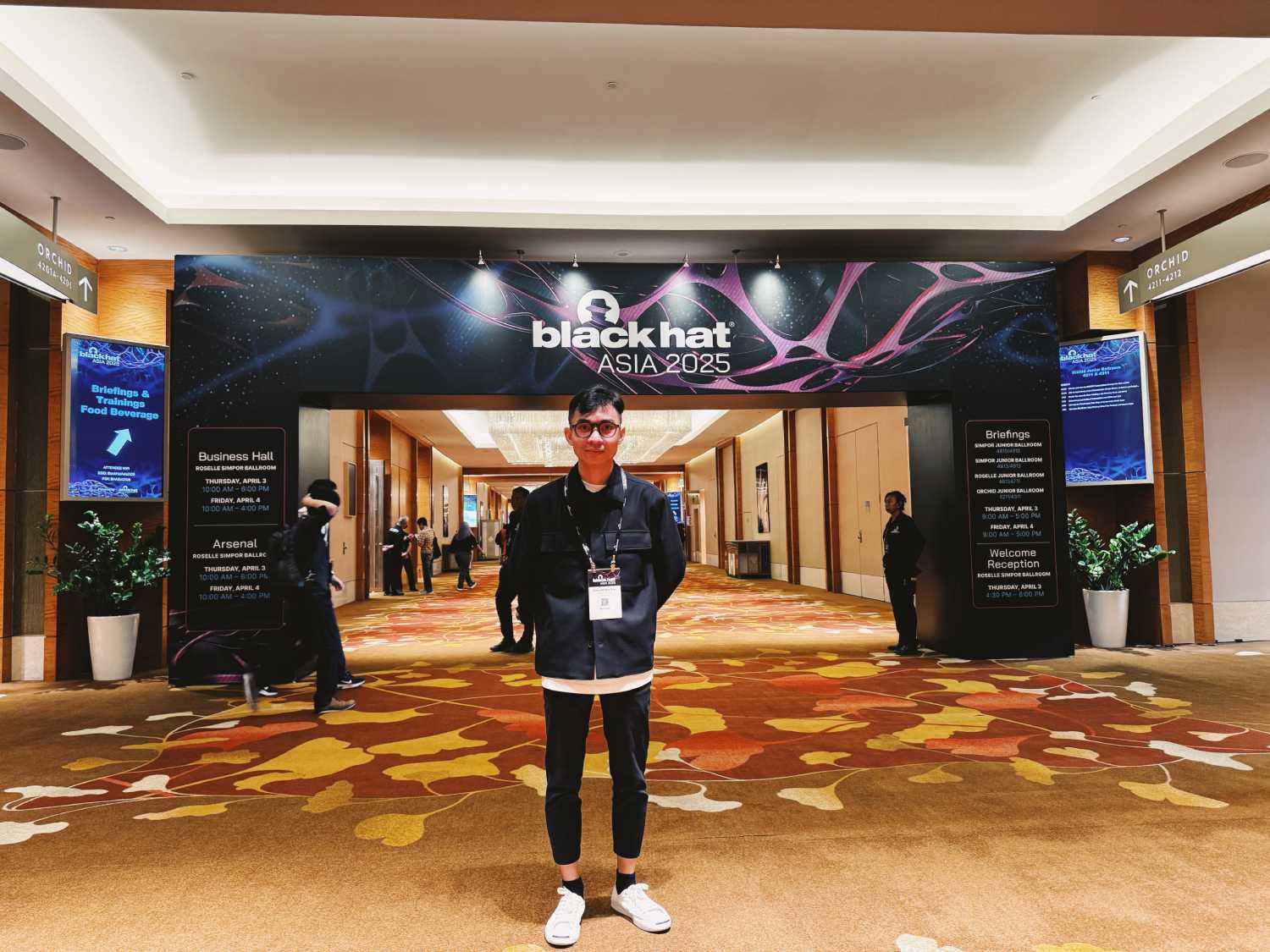
Black Hat Asia 2025 — Field Notes from the Frontlines: A Fintech DevOps Debrief

PCI DSS - CPISI (Certified Payment Industry Security Implementer), SISA Certified
Capabilities

Being a software engineer isn't just about writing code; it's about communication, being a good team player, vision, creativity, and a whole stack of soft skills. Work smarter, not harder. On any project, I reach for leading-edge architecture, the right design pattern, and whatever design the team can rally behind — but I research before I implement, because that's what separates a solid solution from an expensive mistake. Knowing how to use Google well is a real skill that every experienced engineer should own; these days, knowing how to pair with AI sits right beside it. Neither one replaces judgment, though. I stay genuinely comfortable learning new things and spend most of my time researching — whether a company needs it or I just want to get sharper and become a better, more outstanding engineer.
In the development world, everyone has their own style, and some folks insist there's only one right way to do something. The truth is there are always new ways to get things done — and right now, that's truer than it has ever been.

AI & LLM Engineering
This is the chapter that didn't exist when I first built this site — and now it's everywhere. I build with Large Language Models the same way I build everything else: architecture first. That means retrieval-augmented generation (RAG) over a company's own knowledge, agentic workflows that actually get things done, and tool-use through clean, well-governed interfaces. But here's my real obsession — running models air-gapped and self-hosted, so sensitive data never leaves the building. For finance, healthcare, and anyone serious about privacy, that isn't a nice-to-have, it's the whole game. I wrap GenAI in guardrails, evaluations, and human oversight, and I love pointing it at hard problems: fraud signals, identity and biometrics, and document intelligence. My honest take? AI is the most powerful tool of our generation, but it's still a tool — taste, judgment, and security decide whether it ships or flops 🤖🧠.

Cloud Engineering (AWS)
Sounds cool, right? Yes — and maybe. I'm an unapologetic AWS fanboy. I first touched the cloud in 2016 without really knowing what it was. In 2017 I was exploring Firebase with seniors — loved it then, still do. I switched from GCP to AWS in 2019, learning the platform with friends on $5,000 of credits sponsored by Bank of Ayudhya (Krungsri), and with the guidance of my mentor Arjan Chayapol Moemeng (ABAC lecturer) — thank you, Arjan. One thing I'll tell you for free: the cloud is genuinely complicated, so start small, trust me. Today I hold five AWS certifications, including Solutions Architect – Professional, and I design Well-Architected systems that are secure, observable, and cost-aware. I work hybrid too — AWS in the cloud, RHEL and Kubernetes on-prem — because the right answer is whatever the business and its compliance actually need ☁️🛡️.

DevOps Engineering
Yes — this is my main concentration. As a DevOps engineer, I know you can't run anything serious by hand; automation is the job. Shipping code from a developer's laptop to production — properly tested, through every stage — takes real engineering, and that's the part I love. To make delivery fast and repeatable, you live and breathe containers, Infrastructure as Code, and CI/CD. But 2026 DevOps goes further: GitOps and Kubernetes (I run RKE2) for declarative, self-healing infrastructure; supply-chain security with image scanning and SBOMs, so you actually know what you're shipping; secrets management done properly; policy-as-code; and observability, so you catch problems before your users do. It's platform engineering now — building the paved road so every team can deploy safely to staging and production without thinking twice 🙌🏿⚙️.
Backend Engineering
I really love this one — it's one of the most important parts of any system: the server-side logic and the infrastructure underneath it. There's no single textbook definition, but here's how I see the role. You design and maintain APIs that let services and components talk to each other, and you make sure those APIs are secure, scalable, well-logged, resilient, and properly documented. You build the algorithms, business logic, and data-processing systems that do the actual work — synchronous or asynchronous, depending on what the system needs. I lean on Clean Architecture and CQRS to keep things sane as complexity grows, and I go event-driven where it earns its keep. And the database? SQL or NoSQL — I honestly don't play favorites, both get the job done; what matters is modeling it well so it's fast and scales. These days I'm also wiring backends to AI — embeddings, vector stores, and model gateways — so intelligence becomes just another well-designed service 🛠️🔌.

Microservices
I gravitate toward microservices because, done right, they're beautifully organized and a joy to work in. For enterprise systems, this architecture is still where a lot of the future lives — and REST APIs remain a backbone of the industry. Microservices let teams build and deploy independently, packaging capabilities into services that ship on their own schedule, scale on their own terms, and are far easier to upgrade. In 2026 the real power comes from going event-driven — message streaming with the likes of Kafka, plus resilience patterns like retries, circuit breakers, and graceful degradation, so the whole system bends instead of breaking. I'll also say this from experience: microservices aren't a default, they're a decision — you reach for them when the complexity genuinely calls for it, not just because they're fashionable 💂🏿♀️📡.

Web App
I build web apps on sophisticated, modern stacks, obsessing over scalability, performance, and keeping data ownership clean. Back in the day I'd have told you the single-page app was the peak — and SPAs are still great — but the craft has moved on. Today I reach for Next.js with React Server Components, rendering at the edge so apps feel genuinely instant, with accessibility and rock-solid UX treated as features, not afterthoughts. The newest frontier is AI-infused interfaces: copilots, streaming responses, and assistants that live right inside the product. Done well, all of this adds up to web experiences that are blazing fast, engaging, and a little bit magical — for the people using them and the engineers building them 🚀🤝.

Mobile App
I build native mobile apps, and I carry the same design discipline here — consistent principles, implementations meant to last. On iOS I favor mature architectures and patterns like MVC and MVVM, and I lean on Clean Architecture because real business complexity needs a reliable foundation, not a pile of view controllers. The modern Apple stack — Swift and SwiftUI — makes for apps that are expressive and a pleasure to ship. And with on-device intelligence now baked into the platform, mobile is quietly becoming one of the most exciting places to put AI to work: private, fast, and right in the user's hand 🦾🥳.

Product Design
I genuinely love designing products — applications especially. Every detail counts, so I keep things clean, consistent, and as simple as they can possibly be. User experience comes first; the interface follows once the UX strategy is right. I like to simulate the customer journey to build a real scenario around the business, then move from rapid prototyping into high-fidelity prototypes with strong visual consistency, so I can actually see how people understand the flow. And as products grow smarter, design has a new job: making AI feel trustworthy and effortless — clear, honest interactions where the intelligence helps without ever getting in the way 👨🏿🎓✨.

Blockchain Engineering
I've also got real background in blockchain. I've researched and built smart contracts — Hyperledger Fabric in particular, a permissioned blockchain made for modular, enterprise-grade solutions (it's the foundation of my dFastighet project). For a while I'd have called blockchain the most disruptive technology of our generation; these days I'd hand that crown to AI — but blockchain hasn't gone anywhere, it's just gotten more focused. Where it genuinely shines is finance and banking: tokenization, settlement, verifiable provenance, and trust between parties who don't fully trust each other. The hype has cooled, and what's left is the useful part — which, honestly, is the part I always cared about ✌🏿🔗.